This is a paid partner contribution. Commercial relationships are disclosed so readers can distinguish sponsored content from editorial guides.
A dent can look straightforward in a photograph while still leaving the owner unsure what a repair would involve. This partner guide focuses on preparing a useful inspection conversation, with a clear account of the concern and enough practical detail to compare the proposed work.
Document the concern without attempting a diagnosis
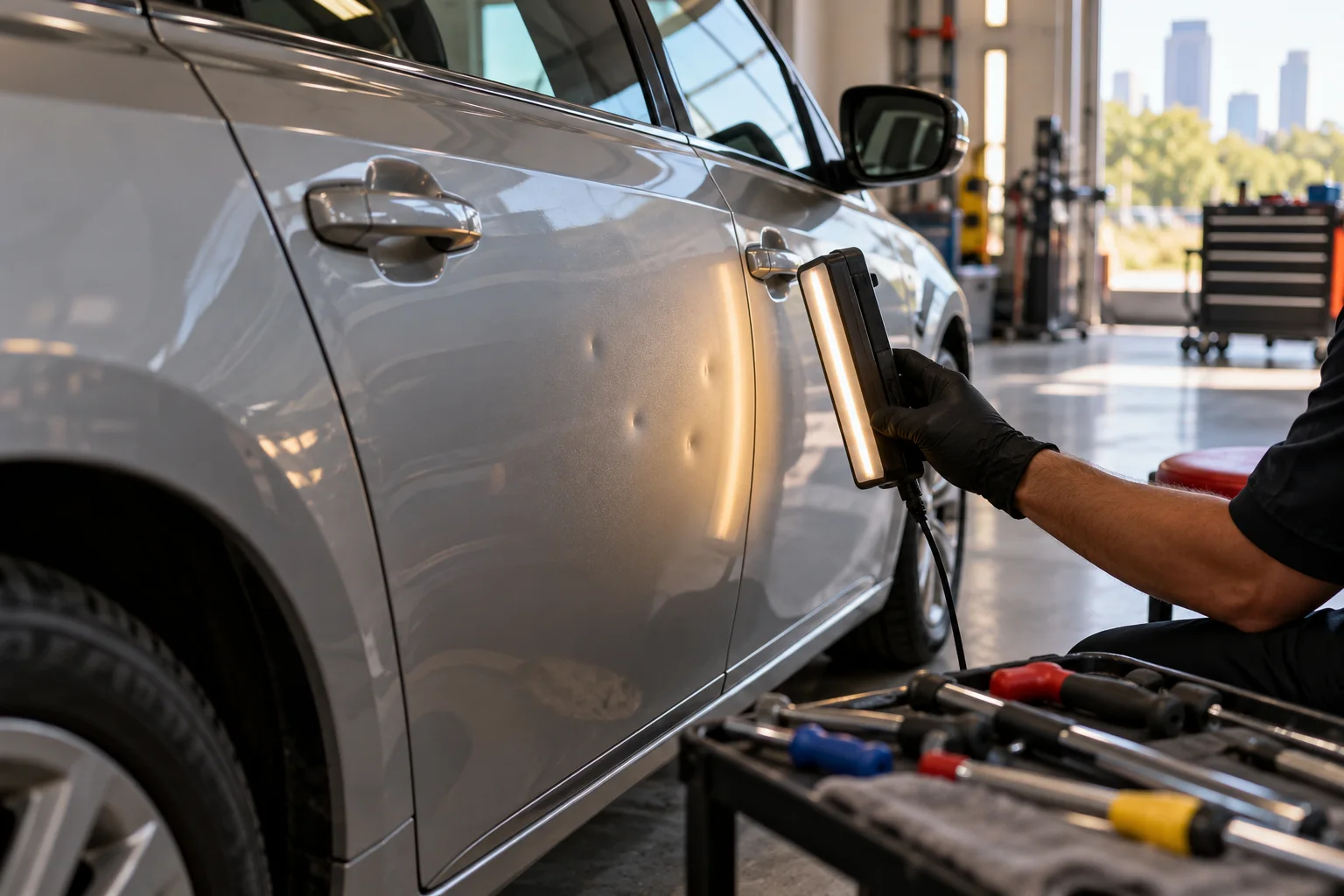
Take photographs when it is safe to do so, including a wider view that identifies the panel and closer views showing the visible mark. Note when you first noticed the damage and whether any previous work was done in that area. Keep the description factual rather than deciding from an image which repair method must be used. If there are concerns about glass, lights, or the vehicle’s ability to operate safely, seek an appropriate professional assessment before driving. For an ordinary cosmetic inspection, the goal is to help the shop understand what you want reviewed. A consistent description also makes it easier to ask several providers about the same concern.
Ask how the proposed work is determined
Request an explanation of the assessment and which parts of the vehicle would be included in the repair. Ask what information can be established from photographs and what requires an in-person inspection. If the shop proposes a particular method, ask why it is considered suitable for the actual damage and what limitations should be understood. Do not assume an appealing before-and-after image guarantees an identical result on another vehicle. Discuss how the estimate would change if additional work is identified and who must approve it. Keep the description in writing so you can compare scope rather than relying on a remembered conversation or a short headline price.
Bring the provider a complete practical brief
DentPicks of Plano presents auto hail repair, paintless dent repair, and lease-return dent services on its website. Use that service information to ask whether the issue you have described fits the shop’s current work. Explain how you use the vehicle and any constraints on leaving it for assessment or repair. Ask about scheduling, communication during the work, collection arrangements, and the written terms that would apply. If insurance is involved, clarify the separate responsibilities of the vehicle owner, repairer, and insurer directly with the relevant parties. A provider’s marketing page is a starting point for these questions, rather than a substitute for an agreed repair plan.
Keep the handoff and return easy to follow
Before leaving the vehicle, confirm the contact person, approved scope, and process for updates. Record relevant information about the vehicle’s condition with the shop and follow its instructions about items to remove or access needed. At collection, review the completed work against the agreed description and ask the provider to explain anything you do not understand. Keep the invoice and any written care or follow-up information with the vehicle record. If a concern remains, describe it specifically and ask how it will be reviewed. A well-organized conversation cannot predetermine a repair outcome, but it can reduce confusion and help a Dallas-area driver make an informed decision about the work being proposed.